Happy Gut, Happy Life: Why Healing Begins in the Gut!
Share This Article
DR. NOBLE TALKS: What you need to know about Gastrointestinal Health
When I was in second grade, I sat proudly in front of my dad, reading aloud my science fair report on the gastrointestinal system. Looking back, I’m not sure why the gut fascinated me so deeply at such a young age—but something in me sensed its importance. I often wondered why I never went on to specialize in gastroenterology. Years later, when I discovered Functional Medicine and its core belief that “all good health starts in the gut,” I finally understood why.
In hindsight, I’m grateful I didn’t narrow myself to one specialty. Modern medicine’s siloed structure causes us to miss the interconnectedness that makes the human body and human experience so extraordinary.
We are an intricate whole, woven together body, mind, and spirit. The gut is our primary point of contact with the outside world. It is constantly communicating with us, and I often say it’s the trillions of microbes within us that do most of the talking.
Last year I wrote about the foundations of optimal health: fueling the mitochondria, lowering toxic inflammation, resetting the HPA axis, and restoring hormone balance. But I intentionally saved the best for last: the optimization of the gastrointestinal tract (GIT).
The GIT is the largest surface area of the body—200 times greater than our skin—constantly interacting with our environment. Its immune-regulating capacity determines whether inflammation ignites or resolves. And at the center of this process lies the microbiome.
The Human Microbiome Project taught us that we host roughly 100 trillion microbial cells, with over 100 times more genes than our own genome, and most of them reside in the gut. Modern life – its stressors, toxins, medications, and processed foods – has dramatically altered this internal ecosystem. When the gut barrier becomes compromised (“leaky gut”), toxins slip through, overwhelming the immune system. The cascade can affect nearly every area of health:
- metabolism slows
- brain function becomes foggy
- anxiety or depression increases
- stress resilience weakens
- hormones dysregulate
- aging accelerates
And more recently, dysbiosis has been linked to osteoporosis, cancer, and neurodegenerative diseases such as Parkinson’s and Alzheimer’s.
Your unique gut flora is shaped surprisingly early, beginning in utero and largely established by age two. To understand its current state, a physician should explore:
- maternal stress, toxin exposure, or antibiotic use
- birth history (vaginal vs cesarean)
- breastfeeding vs formula
- lifetime exposure to antibiotics, NSAIDs, PPIs, birth control, metformin, opioids, statins, antipsychotics, or chemotherapy
- dietary patterns, activity level, and hygiene practices
As research evolves, so do the testing options. AI-based stool analyses now provide deeper insights into the ratio of beneficial to pathogenic microbes, offering more personalized treatment recommendations.
But a critical point often gets missed: more probiotics are not always better.
Certain strains can worsen symptoms—particularly in cases of SIBO—where bacteria from the colon migrate into the small intestine and ferment probiotics into gas and bloating. In these scenarios, spore-based probiotics are often preferred.
Targeted strains matter. Take Akkermansia muciniphila: known for its benefits in metabolic health. If someone’s diet lacks prebiotic fibers (onions, garlic) or polyphenols (deep-colored fruits and vegetables), this strain may actually consume the mucous lining of the gut wall instead of supporting it.
And because probiotics are a lucrative industry, quality varies widely. Studies show numerous products are mislabeled or contaminated. Look for products with:
- the exact strain used in research
- independent verification (e.g., ConsumerLab)
- a GMP certification
Still, the true foundation of gut health begins with lifestyle: lowering stress, reducing toxin exposure, limiting processed and artificial foods, and increasing organic produce, fiber, and polyphenols.
In my practice, I use the 5R Framework for gut restoration:
- Remove offending agents disrupting the microbiome
- Replace essential nutrients, enzymes, or hydrochloric acid
- Reinoculate with targeted prebiotics/probiotics/synbiotics
- Repair the gut lining with supportive nutrients
- Rebalance body, mind, and spirit through movement, meditation/prayer, and therapeutic support
When we support these tiny microbes, they support us in return. A thriving microbiome enhances vitality, resilience, mood, and longevity. When your gut is happy, you truly become your happiest, healthiest, most vibrant self.
Recommended Reading
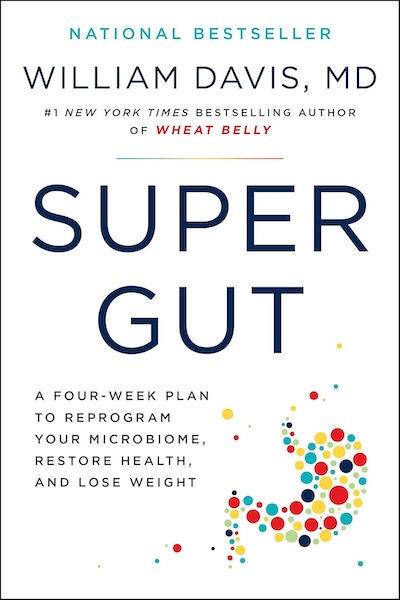
Super Gut: A Four-Week Plan to Reprogram Your Microbiome, Restore Health, and Lose Weight
By William Davis, MD
Dr Davis gives an amazing depiction of what he calls the modern “Frankenbelly” of our times contributing to joint pain, skin issues, mood instability and exacerbation of Inflammatory conditions. He provides novel ways to treat it. It’s a must read for anyone struggling with chronic health conditions, not just GI in nature.
– Dr. Anjali Noble
References
- Damhorst GL, et al. Current Capabilities of Gut Microbiome–Based Diagnostics and the Promise of Clinical Application. J Infect Dis. 2020;223(Suppl 3):S270-S275
- Sommer F, Backhed, F. The gut microbiota-masters of host development and physiology. Nat Rev Microbiol. 2013; 11 (4) 227-238.
- Cani PD, Dlezenne NM Pharmacology & amp; Therapeutics The Gut microbiome as therapeutic target. Pharmacol Ther. 2011; 130 (2):202-212 .
- Sekirov I, Russel SL, Caetono M, Antunes L, Finlay BB, Gut microbiotica in health and disease. Physiol Rev. 2010; 90 (3): 859-904.
- West, CE, Renz H, Jenmalm MC, et al. The gut microbiota and inflammatory non communicable diseases: Associations and potentials for gut microbiota therapies. Allergy Clin Immunol. 2015; 135 (1) 3-13.
- Sampson Ca, Mu A, Haslam N, Schwartz OS, Simmons JG. Feeling down? A systematic Review of the gut microbiota in anxiety/depression and irritable bowel syndrome. J Affec Disord. 2020: 266 (September 2019 : 499-446
- Munyaka pM, Khafipour E, Ghia JE. External influence of early childhood establishment of gut microbiota and subsequent health implications. Front Pediatr 2014; 2 (OCT): 1-9
- Faith JJ, Guruge JL Charbonneau M, et al. The long term stability of the human gut microbiota. Sci (80-) 2013, 341.
- Masco L, Huys G, De Brandt E, Temmerman R, Swings J. Culture-dependent and culture independent qualitative analysis of probiotic products claimed to contain bifidobacter. Int J Food Microbiol. 2005: 102 (2) 221-230.
- Sniffen JC, McFarland LV, Evans CT, Goldstein EJC. Choosing an appropriate product for your patient: An evidence-based guide. Plos One. 2018; 13(12) 1-22.
- Damhorst GL, et al. Current capabilities of gut microbiome –based diagnostics and the promise of Clinical application. J Infect Dis. 2020;223(Suppl 3):S270-S275
- Hrncir T. Gut Microbiota Dysbiosis: Triggers, Consequences, Diagnostic and Therapeutic Options. Microorganisms. 2022;10(3)578.
- Foster JA, et al. Stress and the gut-brain axis: regulation by the microbiome. Neurobiol Stress. 2017;7:124-136.
- Pang S, et al. Longevity of centenarians is reflected by the gut microbiome with youth-associated signatures. Nature Aging. 2023;3:436-439.
- Bastard QL, et al. Systematic review: human gut dysbiosis induced by non-antibiotic prescription medications. Aliment Pharmacol Ther. 2018;47(3):332-45.
- Role of GUT Microbiota and Inflammation in Obesity Wang, et al. Metabolites. 2023;13(7):821.
- Kechagia M, et al. Health benefits of probiotics: a review. ISRN Nutr. 2023;2013;481651.
- Maciel-Fiuza MF, Muller GC, Campos DMS, do Socorro Silva Costa P, Peruzzo J, Bonamigo RR, Veit T, Vianna FSL. Role of gut microbiota in infectious and inflammatory diseases. Front Microbiol. 2023 Mar 27;14:1098386. doi: 10.3389/fmicb.2023.1098386. PMID: 37051522.
- Yoo S, Jung SC, Kwak K, Kim JS. The Role of Prebiotics in Modulating Gut Microbiota: Implications for Human Health. Int J Mol Sci. 2024 Apr 29;25(9):4834. doi: 10.3390/ijms25094834. PMID: 3873206.
- Chen KL, Madak-Erdogan Z. (2018). “Estrogen and Microbiome Crosstalk: Is There a Role in Postmenopausal Osteoporosis? Journal of Bone and Mineral Research, 33(10):1789-1797.
- Ervin SM, et al. (2019). “Gut Microbial β-Glucuronidases Reactivate Estrogens as Components of the Estrobolome. Journal of Biological Chemistry, 294(49):18586-18599.
- Zhou K. Strategies to promote abundance of Akkermansia muciniphila, an emerging probiotics in the gut, evidence from dietary intervention studies. J Funct Foods. 2017 Jun;33:194-201. doi: 10.1016/j.jff.2017.03.045. Epub 2017 Mar 29. PMID: 3041653.
- Maciel-Fiuza MF, Muller GC, Campos DMS, do Socorro Silva Costa P, Peruzzo J, Bonamigo RR, Veit T, Vianna FSL. Role of gut microbiota in infectious and inflammatory diseases. Front Microbiol. 2023 Mar 27;14:1098386. doi: 10.3389/fmicb.2023.1098386. PMID: 3705152.
- Sheridan PO, Bindels LB. Can prebiotics and probiotics improve therapeutic outcome in undernourished individuals? Gut Microbes. 2014; 5 (1) 74-82.
- Singh MM. Integrative Approaches to Managing Gut Health. Current Gastroenterology Reports. 2024. Aroniadis, OC, Grinspan Am.
- The Gut Microbiome: A Primer for the Clinician. The American Journal of Gastroenterology. 2023.